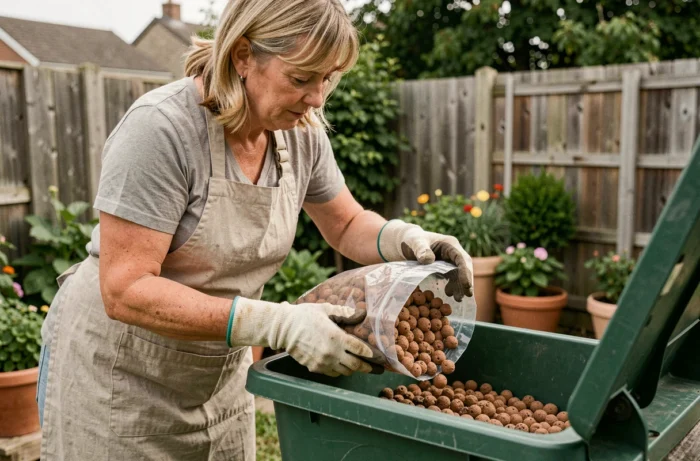
Expanded clay balls are not organic waste. Throwing them into a composter, a bio-waste bin, or abandoning them in nature means introducing an inert mineral material into a stream that does not concern it. As of January 1, 2024, source separation of bio-waste is mandatory for individuals in France.
This obligation formally excludes clay balls from any organic collection, even when mixed with soil or plant litter.
Classification of clay balls in the waste nomenclature
Expanded clay balls belong to the family of inert lightweight aggregates. Their manufacturing process, which involves high-temperature firing that causes the raw clay to expand, gives them a chemical stability comparable to that of gravel or pumice. They do not release any toxic leachate, do not ferment, and do not decompose over time.
This chemical inertness places them in the category of inert waste in the regulatory sense. We recommend never directing them to residual household waste: their volume unnecessarily clutters incineration or landfill centers, while they can be valorized elsewhere.
To dispose of clay balls safely, they must first be correctly identified as inert waste and directed to the appropriate stream.
Waste disposal site and inert waste recovery stream
Most municipal or inter-municipal waste disposal sites accept inert waste in a bin dedicated to rubble. Clay balls, by analogy with mineral aggregates, naturally find their place there. Before heading there, a quick call to your local waste service can confirm acceptance and inform you about deposit conditions (maximum quantity, packaging).
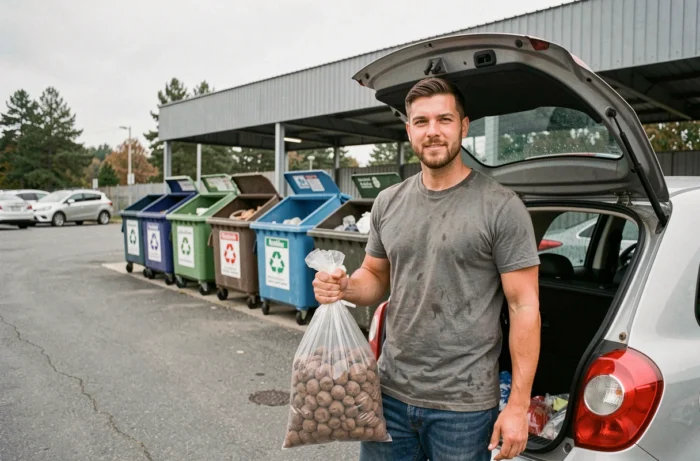
French regulations on construction waste prioritize treatment methods in the following order: prevention, reuse, recycling, material recovery, energy recovery, and finally, landfill for only ultimate waste. Used clay balls in large volumes, for example from the drainage of a rooftop or a landscaping project, can be reused as fill or for public works through inert aggregate streams.
Preparing for disposal at the waste disposal site
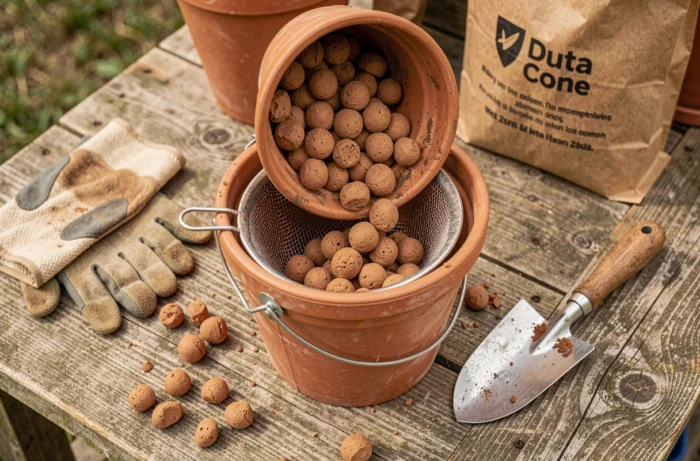
- Separate the clay balls from organic substrate (potting soil, roots, moss). A coarse screening with a garden sieve is sufficient for common volumes.
- Package in sturdy bags or reusable buckets. Thin garbage bags tear under the weight of the aggregates, complicating handling by staff.
- Do not mix with polystyrene, pot plastic, or geotextile: these materials belong to other bins and contaminate the inert stream.
Reuse of used clay balls in the garden
Clay balls retain their drainage properties for several cycles of use. Their lifespan is generally estimated at five years in horticultural substrate. Before disposing of them, we observe that a simple rinse with clear water can remove accumulated root residues and mineral salts, allowing them to be reused in a new pot or planter.
This reuse step corresponds to the second tier of the waste treatment hierarchy and remains the most environmentally relevant solution. A batch of balls from repotting a healthy plant can immediately serve as a drainage layer for another.
Cases where reuse is not recommended
If the balls have been in contact with a plant affected by a fungal disease or root parasite, direct reuse poses a risk of contamination of the new substrate. A prolonged soak in a diluted bleach solution, followed by thorough rinsing and complete drying, can sanitize the batch. If in doubt about the pathogen, it is better to direct the balls to the waste disposal site.
Clay balls and bio-waste sorting: common mistakes
The most widespread confusion is emptying an entire flower pot, clay balls included, into the bio-waste bin or home composter. Clay balls do not compost: they remain intact in the finished compost and pollute the resulting product with non-biodegradable mineral fragments.
Another common mistake is to scatter them directly in a garden bed, thinking it will improve the drainage of the existing soil. On compact clay soil, balls placed on the surface do not migrate deep and end up scattered on the lawn or in the paths. On sandy soil, they provide no additional benefit to natural drainage.
What does not belong in the regular trash
Clay balls do not belong in the gray bin for residual household waste. Their density, even moderate for an aggregate, weighs down the bags and increases collection costs without added value for incineration. They do not burn and end up in the ash residue from the furnace.
They also do not go in the yellow bin for selective sorting. No recycling stream for packaging or lightweight materials processes expanded ceramics.
Large volumes and landscaping projects: professional streams
For landscapers or green space managers handling significant volumes of used clay balls, the inert waste from building and public works stream is the regulatory path. Aggregate collection platforms accept these materials and direct them towards recovery as road sub-base or technical fill.
A waste tracking slip is not required for inert waste below certain thresholds, but we recommend keeping a record of the deposit (waste disposal ticket, delivery note) to demonstrate proper management in case of inspection.
The correct management of clay balls comes down to a simple reflex: consider them as a mineral aggregate, not as gardening waste. Reuse when health conditions allow, waste disposal site in other cases. Two clear streams, no reason to find them in compost or the gray bin.