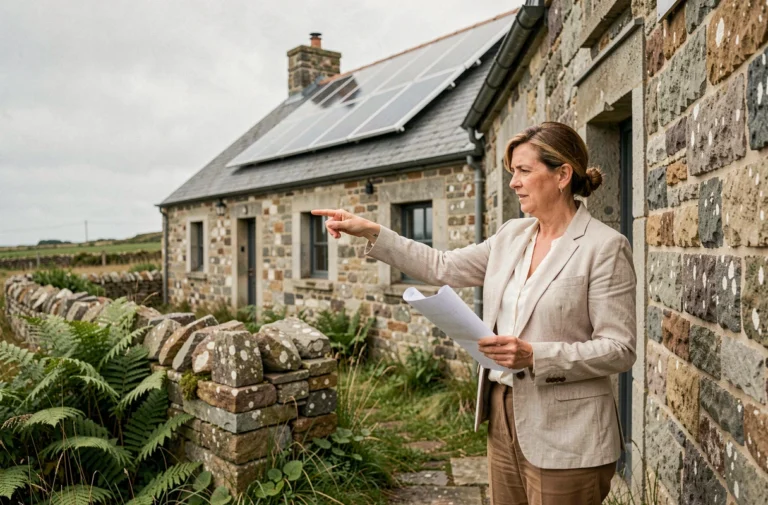
The real estate market in France in the first half of 2026 is characterized by a near-stability of prices at the national level, with an increase of only 0.1% according to the SeLoger / Meilleurs Agents barometer. This figure masks very different realities depending on the type of property, location, and buyer profile. Understanding these trends requires distinguishing several mechanisms that simultaneously affect prices, volumes, and financing conditions.
Scissors Effect Between Supply and Demand in the Real Estate Market
The recovery that began in 2025 was based on a gradual return of buyers after two years of correction. By mid-2026, this movement is losing momentum. According to BoursedesCrédits, the supply of properties is increasing while demand is declining, creating an imbalance that keeps pressure on prices.
This phenomenon is explained by a change in the buyer profile. Rental investors are becoming scarce, and the market is reshaping around owner-occupiers, whose budgets are directly dependent on credit conditions. The latest news in the sector, particularly reported on actu-immobilier.com, confirms this structural reshaping of the French market.
Sales timelines illustrate this gap. According to Mon Immeuble, they have risen to 116 days on average, a level that reflects a functional market but far from fluid. A property correctly priced finds a buyer, but overvaluations come at the cost of additional months of waiting.

Mortgage Rates: The Variable That Slows the Recovery
Financing is becoming the determining factor in real estate trends in France. In May 2026, the average mortgage rate reaches 3.25%, with 3.34% for 20 years and 3.37% for 25 years. These levels remain significantly higher than those that fueled the boom of 2020-2021.
For a household borrowing over 25 years, this difference in rates reduces purchasing power by several tens of thousands of euros compared to the low-rate period. Credit is becoming the main risk for the market, as it directly conditions the number of solvent households.
Banks, for their part, have not dramatically tightened their lending criteria. The brake comes more from the solvency calculation: with heavier monthly payments, the maximum debt ratio of 35% mechanically excludes some applications. First-time buyers without substantial down payments are the first to be affected.
Real Estate Prices by City: Record Gaps Between Apartments and Houses
The national average hides a very marked geographical and typological dispersion. Apartments and houses no longer follow the same trajectory, and the gaps between metropolitan areas are widening.
Apartments: Uneven Resistance
Over the year, apartments have increased by 1.3% in Toulouse and 0.8% in Marseille. Paris shows signs of stabilization after several quarters of decline. In contrast, Perpignan records a decrease of 7.4% over the same period.
The cities that resist share several characteristics:
- A dynamic job market that maintains local demand, such as Toulouse with aerospace
- A limited stock of properties in central neighborhoods, which prevents prices from dropping
- Sustained demographic attractiveness, particularly for metropolitan areas in the southeast
Houses: A Segment Under Pressure
The housing market is undergoing a more pronounced adjustment. Nice still shows +1%, but Bordeaux declines by 8.3%. According to Les Échos / Le Site Immo, apartments are slightly increasing while houses are declining, confirming a very uneven recovery depending on the type of property.
This divergence is partly explained by energy costs. Individual houses, often older and less well insulated, suffer depreciation linked to the energy performance diagnosis (DPE). A property rated F or G loses value each quarter, while newer condominiums benefit from a better rating.

Climate Criteria and DPE: New Filters in the Purchase Decision
Beyond prices and rates, a factor still little documented in traditional analyses is gaining importance. According to Mon Immeuble, 61% of buyers now incorporate climate criteria into their housing choices. This data profoundly alters the geography of demand.
Areas exposed to flood risks, clay shrink-swell, or recurring heatwaves are seeing their attractiveness decline. The criterion is no longer just patrimonial: it becomes insurance-related. Home insurance premiums are rising in municipalities classified as at risk, which increases the overall cost of ownership.
The DPE acts as a second filter. Properties rated G will be banned from rental, and buyers anticipate the cost of energy renovation work. A poorly rated property in a climate risk area accumulates two depreciations, creating considerable price gaps within the same municipality.
Thus, the trends in the real estate market in France can no longer be summarized by a single indicator. The geopolitical context, mentioned by agents interviewed by Mon Immeuble as an additional brake on purchasing decisions, adds a layer of uncertainty. For a buyer, the price per square meter remains a benchmark, but understanding the market now requires cross-referencing credit rates, energy performance of the property, and exposure to climate risks in the targeted municipality.